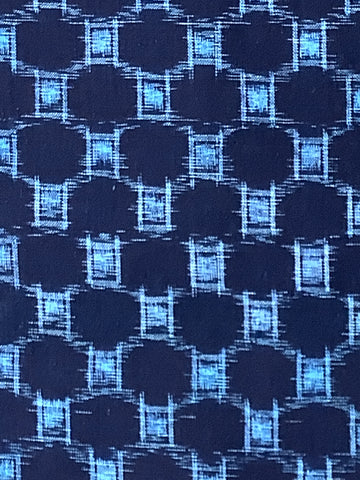
8119: 1950s Japanese Mud Doro Ohshima Tsumugi (Pongee)Silk, Arai-Hari 65in.Kasuri Weave


Catalog#: 8119
1950s-1960s Arai Hari Cleaned Japanese Textiles:
Doro (Mud-Dyed) Ohshima Tsumugi (Pongee) Silk Piece
Classic Akinabara:
Warp-weft kasuri-weave small
1/4 inch elements -basket-weave type pattern
Width:14.5 inches / 36.83 cm
Length: 65 inches / 1.65 m
US$25.00 per piece, plus shipping

- Fabric History/Pedigree: 1950s-1960s pieces received from a traditional Japanese kimono cleaner/reconstructor called Arai-Hari -- see an excellent explanation of traditional Arai Hari by textile expert John Marshall by clicking HERE;
| For an excellent 'how-to' do Arai-Hari oneself, we highly recommend Kae Warnock's Blog, Chocolate Factotum: |
-
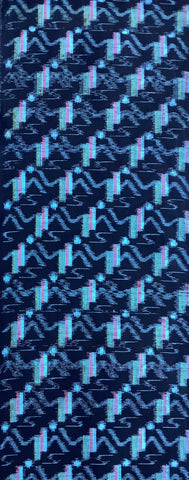
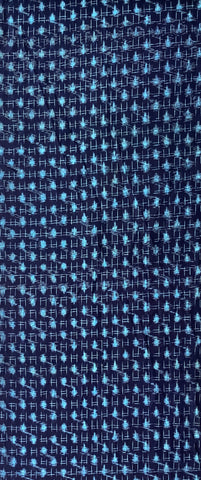
Description: This distinctive Japanese vintage traditional Tsumugi is a thinner light-weight summer pongee-type silk that is dark brown with tan interwoven pixelated lines that form a classic basketweave pattern called Akinabara; this piece's weave is warp-weft kasuri process, creating this pattern by way of the Ohshima tsumugi-weave; This thin, lightweight piece is slightly translucent, probably from summer garment, slightly stiff but softer than many other tsumugi; The design's elements are all about 1/4 inch / 6.35mm at widest; fabric is the same on both sides; Selvedge on both sides is about 3/8inch / 9.53mm;
Cultural Background Info:
Kimonos made from Doro-Ohshima Tsumugi are held in high regard among kimono traditionalists in Japan, given that the Imperial family has been known to wear such fabric in Royal kimonos.
-
Colors: Please NOTE that colors and contrast vary by device, so use our text descriptions to complement your sense of the fabric.
- Condition: Excellent.
Cultural Background Note: From www.nippon-kichi.jp:
To read the rest of the above and learn more about tsumugi, please visit: www.nippon-kichi.jp
Below: Hand-made purse using 1930's Doro Ohshima tsumugi silk, made by Fumi Sakanashi, YokoDana Kimono's owner's sister, an award-winning quilter in Japan. The Doro Ohshima (mud-dyed) is the center patterned portion on both sides, with the solid areas and handles being new; shown in pictures below:   |

YokoDana Kimono
110-A: Authentic Traditional Vintage Japanese Kimonos for Women, 10lbs Bundles
$ 115.00
YokoDana Kimono
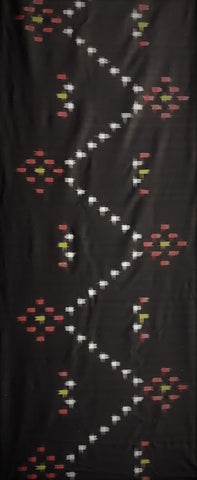
6923: 1930s-50s Deadstock Japanese Meisen Silk Fabric, 1 Yard
Regular price $ 20.00 Sale price $ 10.00
YokoDana Kimono
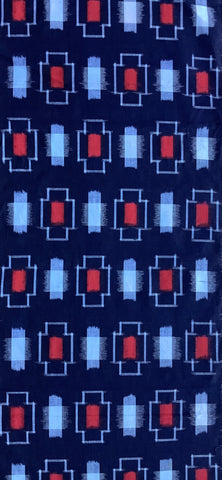
7069: 1970's Japanese Pongee Silk Ohshima Tsumugi, 38 inches
Regular price $ 12.00 Sale price $ 6.00

YokoDana Kimono
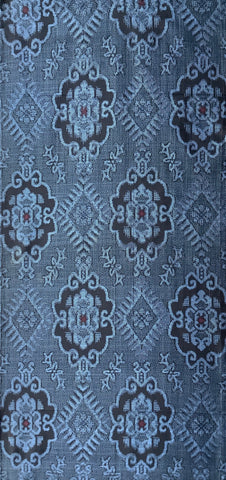
7261: 1930s-1950s Japanese Kasuri (ikat) Cotton Fabric 42in Piece(Arai-Hari)
$ 15.00