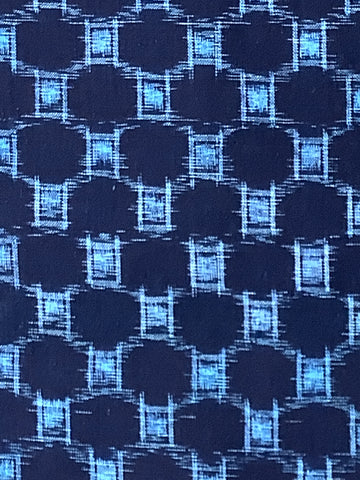
80131: 1960s Plant-Dyed Japanese Silk Ohshima Tsumugi, Indigo-NavyBlue 60in. AraiHari


Catalog# 8013
1960s Rare Japanese Textiles:
Plant-dyed(Techiki) Ohshima Tsumugi(pongee) Silk Fabric
Pixelated, Oblique Geometrics, Floral/Other Medallions
Width: 13.5 inches / 34.29 cm
Length: 60 inches / 144.78 cm
US$25.00 per piece
Plus Shipping

Item Details and Description
Fabric History/Pedigree: Pieces received from a traditional Japanese kimono cleaner/reconstructor called Arai-Hari -- see an excellent explanation of traditional Arai Hari by textile expert John Marshall,by clicking HERE;
| For an excellent 'how-to' do Arai-Hari oneself, we highly recommend Kae Warnock's Blog, Chocolate Factotum: |
Fabric Description Details:
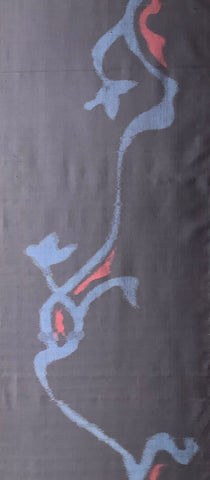
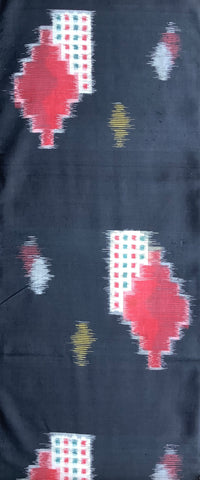
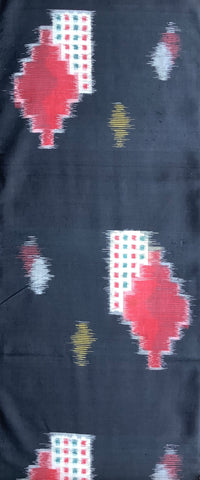
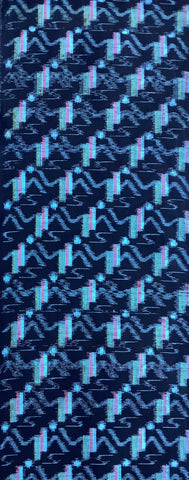
This thin, lightweight piece is translucent with indigo blue-black background and full field of various different obliquely shaped figures, all filled with varying pixelated solid patterns counter balanced with rounded hexagonal medallions placed asymmetrically; these medallions have a vlral appearance with red accents at centers; note also that thre are other light blues therein; as for the 'solid' odd shaped spaces, they are variations on the pixelated theme; the medallions average 6 inches / 15.24cm in length; The variation in coloratios of the Background colors indicate to us that this is good example of using techicki plant dyes in creating this fabric.
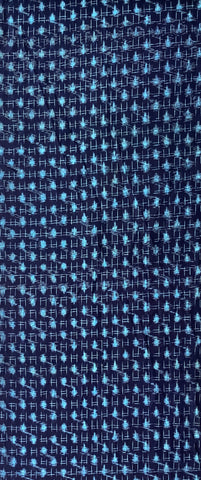
In these older mud-Ohshima fabrics, note how the motifs are rendered by the pixelated fields throughout all the various geometric and medallion-like patterns, this pixelation is common in Tsumugi due to the weaving methods, but the lighter fabric shows the pixelation a bit more (please see closeups);
The fabric is the same on both sides; no elvedge on both sides; Kimonos made from Doro-Ohshima Tsumugi are held in high regard among kimono traditionalists in Japan, given that the Imperial family has been known to wear such fabric in Royal kimonos.
Colors: Please use our text color descriptions to complement your sense of the fabric due to differences in contrast and color on different devices.
BACKGROUND JAPANESE TEXTILES CULTURAL NOTES:
There are various types of older Ohshima Tsumugi silk that involve tsumugi using mud, indigo, and grass or plants in the dyeing process.
To learn about the older Ohshima textiles, there are details on that aspect of Japan's special pongee silk-making process which can be found on the National Foundation for Promoting the National Costume of Japan website. The site explains the natural plant dyes and mud etc. used in making older (1960s and earlier) Ohshima Tsumugi silks, quoted here:

YokoDana Kimono
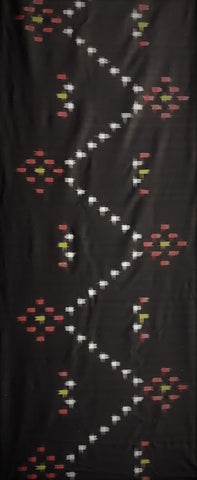
6923: 1930s-50s Deadstock Japanese Meisen Silk Fabric, 1 Yard
Regular price $ 20.00 Sale price $ 10.00
YokoDana Kimono
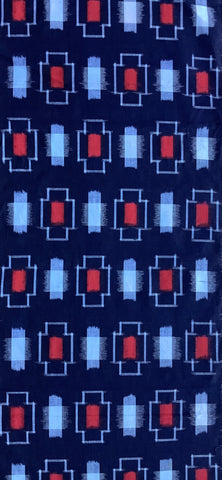
7069: 1970's Japanese Pongee Silk Ohshima Tsumugi, 38 inches
Regular price $ 12.00 Sale price $ 6.00

YokoDana Kimono
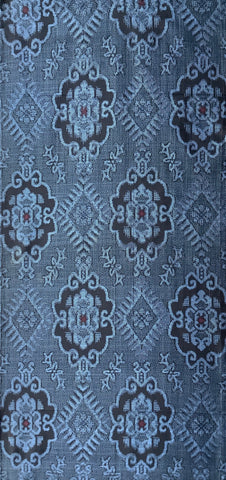
7261: 1930s-1950s Japanese Kasuri (ikat) Cotton Fabric 42in Piece(Arai-Hari)
$ 15.00